Now You See It...

8.2.10

Communications / II


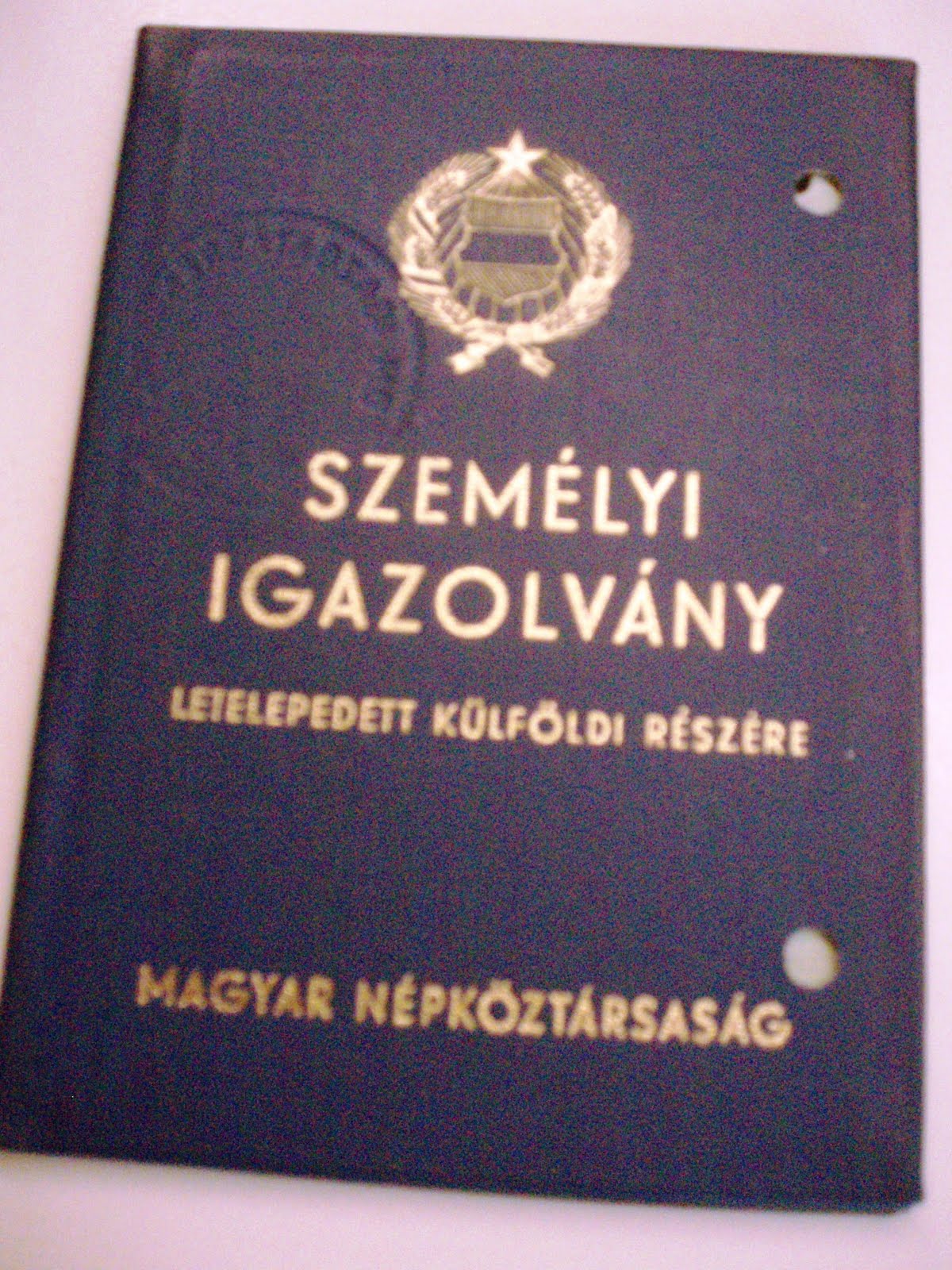
It took more than a year to organise the permits to come and live in Hungary in 1982. The preparations also entailed a visit to the Hungarian Embassy in London where we were given a talk about what we could not take with us when we left: the list included all forms of pornography or a photocopier (strictly banned and not to be found anywhere in the country) – furthermore, we were told that if we brought a typewriter, we would have to provide a sample page of typing from which our machine could, if necessary, be identified.

Communications of every kind were severely curtailed in Hungary at that time. The rarity of telephone ownership and their technical shortcomings were further complicated by the fact that everyone was well aware that calls could be – and were – monitored. Certain topics were never alluded to on the telephone, but only in personal meetings. Letters could be opened – the clearest indication to us that ours were being read was that weeks passed when we did not receive a single communication from home, following which we would find half a dozen envelopes in our post box, bearing postmarks as much as three weeks apart; some letters never arrived. That parcels were always opened was not even secret – wrapping paper was torn, contents arrived damaged or even missing, and a fee was payable for the ‘privilege’.

Meanwhile, the media was, inevitably, strictly censored – not that our Hungarian was halfway to tackling the complexities of a broadsheet in the language – no tabloid press existed. A friend consoled us when we expressed some frustration at our inability to read the papers with he words, “In England people read the press to know what to believe; here we read the papers to know what not to believe!”

Watching television left us none the wiser. There were no broadcasts on Mondays, the official explanation being either that people should use their time for more uplifting pursuits, the more plausible one, that it was an energy-saving measure. The Evening Exercises programme (Esti Torna) was enthusiastically promoted – as were all forms of sport and keep fit – and many people made sufficient space in their overcrowded concrete flats to participate in the gymnastics every evening. Meanwhile, the news was dominated by pictures of combine harvesters bringing in the wheat, and smiling factory workers showing off the products that would more than fulfil targets in the Five Year Plan.
Access to foreign media proved equally limited. Foreign newspapers were occasionally available in dollar shops, though they were expensive and usually out of date. I experimented once with newspaper booths, but was only offered the Daily Star, the organ of the British Communist Party – I had heard of this, but never seen it. The only reliable source was the British Embassy library where we would go when we had time, but where papers were also days old. Hungarians who were not diplomats could not enter dollar shops, and most were wary of entering the embassy since it was an open secret that such visits were monitored by the porter at the entrance to whom you had to show your ID card.

In the obvious absence of the internet, the situation resulted in almost total ignorance of what was, in reality, happening in the world beyond Hungary’s borders. Interestingly, the Hungarian use of the word ‘outside’ (kint) to mean outside the country, in other words, abroad, persists to this day, but then had the added overtone of ‘on the other side.’

We were fortunate enough to be able to locate the BBC World Service on an old Russian radio we found in our first flat. It was somewhat of a surprise that it had not been jammed, but so few Hungarians knew English that possibly it was not deemed a threat. It was over its crackly reception that we heard that Chernobyl had exploded in 1986, while Hungarians went about their daily business in blissful ignorance.
None of our few English compatriots had a telephone, so we were unable to pass the news on to them – a telegram could have been a risky strategy. Thus it was that we sat with our musician friend Laurence that evening, ruminating on the severity of the fallout, the extent to which Hungary could have been affected, and the likelihood of our being subjected to radiation. His solution to the absence of information on the subject from local sources was as practical as it was simple: Let’s put out the lights and see if we glow in the dark! he suggested. Thankfully, we did not.

2.2.10

Communications / I


Possibly the comment most frequently made when talking about the nigh twenty-eight years I have spent in Hungary is, You must have seen a lot of changes in that time! It would obviously be impossible to enumerate the differences, but I have mused upon what single factor has, in fact, changed most dramatically, and it would undoubtedly have to be that of communication. This aspect of life has altered everywhere since the advent of the mobile telephone and the internet, but here in Hungary these dramatic developments, occurring within a much eclipsed time span, have completely transformed society.

Before 1989, approximately one tenth of people in Budapest had a telephone, whilst in villages the doctor was likely to be the only such person – a single public kiosk having to suffice for the remaining inhabitants. To this must be added the fact that phones were notoriously unreliable: a deafening silence often replaced the comforting purr of a working line; numbers remained engaged for days at a time; rain frequently rendered phone lines unusable, or resulted in crossed lines (I succeeded in speaking to someone in Pakistan when trying to reach a friend in Buda!), or so many callers were apparently sharing the same line, each demanding the others hang up, that it was impossible to have a coherent conversation.
And this was in the happy event that you had your own apparatus at home - even a party-line was heaven-sent! (Before coming to Hungary this term was something I had only come across in black and white Ealing Studio films my parents watched!)

Street phones came in two varieties, red and yellow. Yellow appliances were for domestic calls at 2 forints a time; their red counterparts were for calls abroad. Here, the range of possibilities preventing the successful procedure of ringing someone, was vastly increased. Though vandalism did not at that time exist per se, frustrations with the shortcomings of phones were often turned into destructive revenge on the receivers themselves which hung limply, their disembowelled wires hanging from cracked ear pieces. Then came the list of technical problems: the phone was dead, there was no line; it was impossible to insert one’s 2-forint coin in the slot; the coin kept dropping through; the coin was retained but the buzzing line continued; you dialled, but even your most frantic shouts could not be heard…

In these circumstances it was usually quicker (and considerably less wearing on one’s nerves) to visit the person you wished to talk to. This resulted in impromptu gatherings in people’s homes all over the city on any night of the week. The only way of talking to someone who did not have a telephone, was to visit them. This was as accepted as it was unexceptional – there was quite simply no alternative. The result was that one’s friendships and relationships were close and extensive, as one inevitably met the children, parents, families and friends of existing friends and colleagues. This provided new contacts and a growing network of friends: one could almost say it was a living counterpart to the virtual world represented by today’s Facebook.

The red and yellow shiny plastic apparatuses are long gone, having been replaced with the shocking pink T-com models. But almost as quickly as these were installed, and colourful phone cards sold in place of using coins, so mobile phones rendered public phone boxes passé in their turn. (I cannot remember when I last observed someone using a public telephone.) In fact, many Hungarians went from having no phone at all to having a mobile, leaving out the stage of an (unreliable) mainline telephone altogether.

Today, the brave new world of emails and text messages, Facebook and twittering, have obviated a trek though wind and rain to the other side of town to see a friend, bottle of wine in hand, possibly to meet an unknown group of people, play with a friend’s children and share in a very real evening of food and un-virtual chat. Regret at its passing may be regarded as nostalgia pure and simple; but in the era that sought to make communication as difficult as possible, it thrived as it has not done since. Yet another paradox.


26.1.10

A Man’s Home is his Castle


Disused tram rails run parallel to our street, whilst just behind them rises a railway embankment full of bushes, trees and magpies. In summer months both the railway and trains are invisible behind the dense green of branches, and the embankment is a jungle of plants and cats. In winter, however, the bare bushes reveal all that lies hidden in warmer months.

Just before Christmas it became evident that there was a makeshift dwelling, no longer camouflaged by greenery, at the base of the embankment where it meets the overgrown tram lines. A single line of footprints in the deep snow across the tram tracks confirmed that someone was living beneath the blue and grey plastic, draped carefully over the bare branches of bushes. On that day a blizzard obscured the collection of wood and sheeting, as temperatures sank well below zero. By afternoon, small red flames flickered on the now dark embankment, and from our vantage point at our kitchen window we began to speculate on the occupier’s prospects of surviving a night in the open in such conditions.

Remembering the name of the Menhely Alapitvány shelter I had seen on stickers on public transport, we looked for their web page and telephone number. As we began to describe the location of the hovel they informed us that the man was already known to them, but he had told them he did not want to go to a shelter. I had heard such stories before: people afraid of being robbed of their meagre possessions in the company of others in similarly desperate circumstances.

Feeling we could hardly leave an hour or two hence for the party we were invited to, and stand at the bus stop a mere two or three metres from this miserable sight, we decided to verify the information. Filling a plastic bag with half a loaf of bread, some ham and a container with hot soup, Paul added his own footprints to those over the tracks in the deepening snow. The man was crouching in his makeshift home and attempting to warm himself by the fire; the howling wind whipped up clouds of snow, threatening to blow away his roofing. He was sober and friendly, if somewhat surprised by his unexpected visitor. He welcomed the food and said he did not want to freeze to death, but he could not afford to go to a shelter. The factor of payment had not occurred to us, and thus Paul left him, promising to ring them again and ascertain the situation. A further phonecall confirmed that he would not have to pay, and that someone would come and offer him a warm bed for the night. Another foray out through the bitter cold and relentless wind brought the hopeful news to the hopeless man.

As we stood at the bus stop an hour later, watching the dancing yellow-orange light on the white embankment, we wondered if he really would be rescued from this coldest of nights.
On returning, some time after midnight, the fire was black and spent; but there was now a third set of deep footprints leading over the tram lines across to the hut: they had kept their word.


http://www.menhely.hu/
(061) 338-4186

20.1.10

The Show Must Go On


I had noticed the many posters for the Jacko Tribute Concert from bus and tram as I travelled around the city, but had decided that the film This Is It was unlikely to be surpassed by anyone attempting to imitate the inimitable.

The pre-show write-up informed the would-be audience that: The show revives on the stage the legendary Bad Tour….It features Jackson’s four dancers…his two vocalists and four musicians. The similarity between them is breathtaking,” (Expatloop website). In stark contrast, the post-show review (the Hungarian Index website) spoke of a ‘lynch mob atmosphere’ with descriptions of a performance which could only have been tolerated by indulgent parents and benign friends and relatives at a school performance. Far from the audience asking themselves, “Is it absolutely sure that he is not Michael?” (Expatloop) they were (according to Index) whistling in derision, and shouting to have their ticket costs (13,000-20,000 forints) refunded. In fact, the audience had already turned their backs on the dancer on stage (not the one advertised to take MJ’s role) and were watching the far superior moves of an American member of the audience, who had spontaneously decided to give his own unscheduled performance – and who incidentally also looked much more similar to Michael Jackson. Then came an unscheduled interval of fifteen minutes – just enough for security guards to remove the self-styled star of an alternative show that was magnetising the outraged audience.
All in all, this was an amateurish, embarrassing travesty, which once again leaves one wondering why. If – as the organisers claim – the cast was unable to obtain the necessary visas in time for the performance, why not reschedule? Did they really imagine their audience would be fooled by this poor imitation? The days when any ‘western’ performer, no matter how feeble, was welcomed unreservedly for having ventured to this forgotten part of the world, have long (long) gone! As the seething audience left the scene, lawyers were observed handing out their business cards and offering to help them sue the promoters for misrepresentation….

Though I was not present at this concert, it reminded me of a similar experience a few years ago – though one which had a more fortuitous outcome.
In the summer of 2004, I agreed (albeit reluctantly) to accompany a friend who was keen to attend the Liza Minnelli Concert, scheduled to take place in the Kisstadion. On the appointed summer’s evening we set off on the bus, arriving at the small road which leads to the open-air stadium. We were running a bit late and hoped that security checks at the gates would not mean we missed the beginning of the concert – the posters had not made it clear if there was a suppporting band. However, as we started our walk we were astounded to see only one or two other people heading in the same direction. We were equally puzzled that it was practically silent.
At the gates the security personnel took no more than a cursory look at our tickets and waved us in – to a practically empty stadium! We checked our tickets to see if we had misread the time and were in fact early, but no. After some fifteen minutes somewhere towards the top of the enclosure, and seeing few if any people arrive to fill the seats below, we moved to the sector nearest the stage. There we waited….and waited….and waited: well over an hour, during which time the only communication was the puzzled looks of one member of the audience to the next – all fifty or sixty of us - in a stadium whose capacity is fourteen thousand! Finally there came the band’s intro to the glare of lights, and then quite unannounced, on to the stage came…..Bonnie Tyler! A true professional, she could have been singing to a packed stadium – there was not the slightest hint that this was not a scheduled concert to a full house.

Needless to say, on leaving the stadium there were mutterings all around of threatened legal action, especially in view of the fact that there were no posters indicating that Liza Minnelli was not performing. That news had been announced on the radio only, and not all had heard it. Neither had the security guards thought to mention the fact…
But not all were disappointed: during Bonnie Tyler’s show, I observed a steady trickle of unlikely-looking pop fans entering the stadium and taking their seats alongside us all. The security guards had either decided to entice anyone and everyone in the vicinity to swell the pitiful audience, or they had abandoned their posts, leaving the gates open to all-comers. Among them, an elderly couple, the man in slippers, shuffled in; two homeless men I had seen outside on the street; and finally, a Romanian man I had recently come across near Keleti station trying to sell binoculars to passers-by from a large sports bag he was carrying. He made himself comfortable, and then, unzipping his bulging bag, took out one of the many pairs of binoculars and settled back to enjoy his unexpected free evening’s concert.

14.1.10

Taking Stock


The advent of a new year is for many characterised by a certain degree of stock-taking: an appraisal of the year passed, its achievements and disappointments, together with some resolutions and plans for the year to come. In Hungary, quite another kind of stock-taking may have started to penetrate the consciousness of those seeking to take advantage of the winter sales (which this year began well in advance of Christmas), or those simply needing to buy some trivial item as holidays peter out and we limp back to work.
For foreigners still grappling with the language, the word ZÁRVA will most likely have been one of the first they mastered. Back in the 80s this item of vocabulary was acquired simultaneously with the word nincs – covering all possibilities from We have none, There are none, or There is nothing – the message’s unequivocally negative meaning accompanied by an expressionless stare to reinforce it.

To anyone out shopping in the last week, I am sure these invaluable expressions will now have been supplemented by a new one: Leltár miatt zárva. The last word, at least, will already be familiar. The sign so optimistically placed in the unquestioning expectance of your total understanding, means: Closed for Stocktaking. The number of days given over to this activity in Hungary (regularly four or five whole working days) is an indication of its importance relative to that of selling that stock, and thereby doing something to mitigate the effects of the difficult financial climate!

In the struggling Aréna Pláza shopping mall, a huge branch of Marks and Spencer’s stood with its metal shutters down last weekend, the self-important sign signalling that – unlike neighbouring premises – this was shut for a good reason, and not because they are going out of business.

Foreigners may be forgiven for having thus far been unaware of this mysterious activity. Such stocktaking as is required in western Europe is now for the most part done electronically. My own parents, who ran a small shop in England when I was growing up (before computers or bar codes), completed their annual stock take on paper, between closing the shop doors on a Saturday afternoon and re-opening on Monday morning – as I am sure all shopkeepers did. The concept of inconveniencing one’s customers whilst concurrently losing takings, would have been unthinkable.
Alas, not so in Hungary. That this was common practice under communism is hardly surprising – shops existed as much (or more) to provide employment as to sell things. But that was twenty years ago….

Equally frustrating, though with just an outside chance of genuineness, is the sign you may see at any time of year: Műszaki okok miatt zárva. (You will now be familiar with the final two words.) The sign means, Closed for Technical Reasons. You may indulge your imagination here as to precisely what these ‘technical reasons’ might be – especially when neighbouring premises seem to have electricity, and there is neither fire nor flood in the vicinity.

My favourite sign, though, was that which I saw some years ago on the closed door of a small shop in Zsámbék at approximately 11 a.m. one morning. Utterly refreshing in its honesty, it could only make me laugh. It stated quite simply: Gone for Breakfast. If I’m not back by noon, then for lunch, too !

8.1.10

Smile…. and you smile alone


It hardly seems worthwhile stating to anyone who has spent more than a day in Budapest, that Hungarians don’t smile very much.

They quite likely feel they have very little to smile about. It is January: I find it quite difficult myself to overcome the combined gloom occasioned by the weather, the knowledge that the festivities are over and only work beckons, and the fact that the new year always heralds significant price rises. It is a Hungarian ‘tradition’ that no sooner has the last trumpet blown to sound out the end of the year, than BKV, ELMŰ and FőGáz extinguish any lingering vestiges of joyfulness that may remain from Christmas, announcing increases that would make residents of other countries pale.

Any tentative suggestions on the part of non-Hungarians that they could make some effort to be more amenable, friendly even, in their dealings not only with foreigners, but with one another, are usually greeted with disdain: It’s alright for you English and Americans telling us to smile – if we lived as you do, we’d have something to smile about. You don’t know how difficult our lives are.
I am forced to agree that the lot of the average Hungarian is indeed more difficult than that of his counterpart in England (I cannot speak for America). However, the idea that money would enable them to smile is no more than a fantasy. Working in an environment where I come into daily contact with people they deem to have it all (the nouveaux riches Hungarians), I see no discernible difference. In spite of owning almost everything money can buy, they do not smile either; they feel as dissatisfied with their lives as any other magyar: if only they lived in a richer / better organised / more (insert your own adjectives……..) country, they would have something to smile about!

Each week I visit a friend of 87 years of age in hospital, who has been bed-ridden for almost three years. The nurses, both underpaid and overworked as everywhere in Hungary, vary in temperament from the surly to the saintly. I have observed the all-too-palpable effects of their behaviour on the patients in their care. In circumstances where such elderly people are able to do little for themselves, the slightest sign of warmth or empathy, and an ability to make light of this most difficult situation, are felt with exaggerated keenness.
The nurse who puts a smile on the faces of those in her wards, lost her son just before Christmas one year ago in tragic circumstances. Yet in the midst of this terrible period in her life she continued to bustle about the wards, smiling, joking with the senile 99-year old in the same room, and trying to lift the atmosphere of gloom which only too quickly descends in her absence. Not only does it make their days more bearable, it lifts her own and her colleagues’ mood too. The day’s work can be done in resentful bad temper or with some good humour: neither will affect the wage at the month’s close, but both affect dramatically the quality of life for both the patients and the nurses themselves.

To anyone who has had even a passing contact with Africans, it is no news that in circumstances which are below the very poorest in Hungary, they smile constantly. The correlation between one’s bank account and the look on one’s face is tenuous at most.

So, as Hungarians pose the riddle : Why will the new year be an average year? To which the answer is: Because it will be worse than last year and better than next, I wonder whether we must rationalise their sullenness, using the now-fashionable excuse – it’s all in the genes….?

1.1.10

Happy New Year!


As trumpets blare in the street to the accompaniment of the odd (illegal) firecracker, and an increasing number of (now legal) fireworks, we begin another new Year’s Eve in Budapest.
Janus-like, it is traditional at this time to look both forwards to the coming year, and back at that which lies behind. Here I am forced to admit that while I love the period one used to call Christmastide, I dislike what I find a rather forced sort of celebration and jollity which marks the end of the year. Unfortunately, the problems one had on December 31st will still greet one on the dawn of January 1st, and likewise, the successes and achievements of the old year are not negated by the new. Yet I aquiesce and stay up, sharing in some champagne and enjoying the fireworks I can see from the window.
The fireworks are new: prior to 1989 they were illegal and thus even our November 5th celebrations in Budakeszi at our friend Caroline’s, were marked with sparklers saved from the previous year’s Christmas. Firecrackers became popular – smuggled in from who knows where – in the early 1990s, thrown indiscriminately in the path of pedestrians, or up onto balconies, causing alarm more than actual injury (though this was also not unknown). As a result, they were eventually banned, though this offers no guarantee against your having one casually thrown in your direction as you walk the streets.
In other respects Szilveszter (the saint’s name for the 31st December) has not changed significantly: masks are worn and trumpets are blown – though the Russian champagne we used to buy was (as I remember) better than anything now available, and at a fraction of the price.
I remember just one New Year which was extraordinary – that of 1989-1990. In the quiet days between the celebrations of Christmas and New Year, I ventured out to our local market, Lehel piac, to replenish our supplies. Those who have recently come to Hungary will picture a colourful building with clean aisles and neat shops. Prior to its renovation, this market was reckoned to be the cheapest, in one of the poorer districts, and was a higgledy-piggledy array of stalls where in winter we slid through the mud, slush and trampled vegetables of its largely outdoor premises.
As I alighted from the trolley bus, I first thought the market was closed: there was little sign of movement and a muffled quietness suggested the atmosphere of a late Saturday afternoon when the stallholders would be packing to leave. I proceded into the market itself and found the stall keepers standing in small groups, talking. Behind them stood the grey wooden structures that usually groaned under their burdens of winter vegetables, quite empty. To some westerners who believed that people in communist countries did not have sufficient to eat, it would occasion little surprise that there was nothing in the market, but this was in fact quite the opposite of reality. I had never seen a sight to match this – not a single cabbage nor onion remained. I asked the man nearest me if the market were closed. No, he replied, but people had been panic buying since they had opened at 6a.m. and now nothing remained.
The same was true throughout the city: rumour had it that the Forint was about to collapse and that the only possible course of action was to invest one’s savings in buying goods which could possibly be re-sold later. Shops soon sold out of everything from saucepans to electrical appliances, and when this domestic supply was exhausted, a veritable convoy of well over 100,000 cars and vans headed for Austria – families subsequently returning with two and three fridge-freezers, or whatever they thought they could re-sell when cash would be needed.

2010 will bring elections and unknown changes in their wake. Hopefully, the new year also will bring good in equal measure to unavoidable difficulties.
A Happy New Year to my blog’s readers – I will continue to offer what I hope will be interesting perspectives on life here in Budapest.